 Motion Simulator Platforms
Motion simulator platform design and development
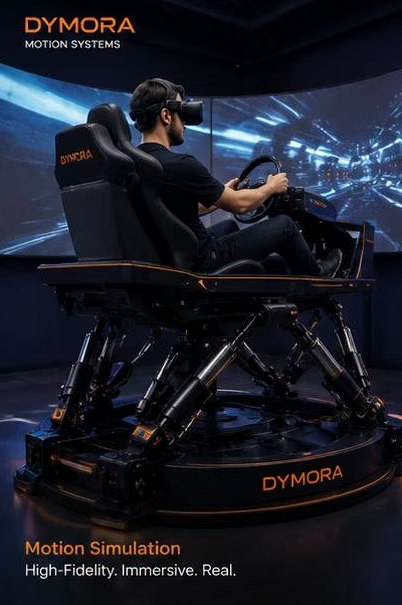
Visual simulations alone often cannot convey force, acceleration, and movement. Motion Simulator Platforms, developed by Dymora within the YMOND ecosystem, addresses this need. It combines motion platforms, control systems, and simulation content to produce physical feedback suited to the scenario.
- Specialized department
- Dymora
- Scope of application
- Mining, steel, manufacturing, and industry
What exactly does this solution solve?
This solution is intended for specialist training managers, simulation centers, amusement parks, and experience centers. It can support driving and flight experiences, training, and the simulation of specialist skills. Implementation is tailored to each client's goals and operating conditions.
Start with the real problem: what does the end user need to do, which steps are difficult, what information or equipment is available, and how will success be measured? It combines motion platforms, control systems, and simulation content to produce physical feedback suited to the scenario. Defining these needs guides feature design and helps avoid unnecessary development costs.
Applications and use cases
- Can be designed to experience driving, flying, training and simulating specialized skills
- Implementation of a dedicated project based on audience, equipment and environment
- Evaluation of an initial scenario before full development
Key capabilities and components
- Multiaxial motion reconstruction suited to a driving or flying scenario
- Combining motion controller with VR experience and simulation engine
- Structure adjustment and range of motion according to user weight and safety requirements
- Prototyping, testing and integration of mechanics, electronics and software
These capabilities are the domain of solution design and development. Engineering specifications, scope of implementation and deliverables are determined in the technical review of each project
How the solution is experienced or implemented
Definition of purpose, audience, environment of use and safety conditions
Mechanical, control and software feasibility study
Concept design and prototype to suit requirements
Build, integrate, test and deliver according to project acceptance criteria
Technology, requirements and project output
Technology and technical requirements
Dymora uses a combination of mechanical design, electronics, control systems and interactive software to develop this family of solutions. Depending on the application, connectivity to XR technologies, image processing and sensors can also be defined in the project scope
Customization and deliverables
Output specifications can include engineering design, prototype, operational hardware, controller, related software and operation manual; Fixed items are determined based on the contract and project maturity level
Before starting, define the business or operational goal, an example scenario, budget and timing constraints, deployment environment, and technical decision-maker. These details help establish a realistic scope and delivery criteria.
Who is this solution for?
Purchasing and implementation may involve technical, training, product, marketing, or operations teams, depending on the intended use. It can support driving and flight experiences, training, and the simulation of specialist skills. If the problem or access to the necessary data and content is unclear, start with a needs assessment or pilot.
Product image gallery
1 imageRelated experience and projects
- Galapod; Driving simulator
- Airmaximus; Motion flight simulator
How to assess the solution's quality
Before purchasing or developing this solution, agree on the following three acceptance criteria in the technical review, alongside the required features:
- Adaptation of mechanics and control to load and environmental requirements
- User safety and system maintainability
- Integrated hardware and software on-site testing
Frequently asked questions
How does a motion simulator differ from static VR?
Static VR relies more on image and sound; A moving platform with acceleration, vibration or angle change can add a sense of motion to the experience
How is the number of motion axes selected?
The number of axes is chosen based on educational or recreational purpose, range of motion, space limitations, safety, and budget; The specific number is not announced without project specifications
Does it integrate with headset and simulation engine?
Possible to combine with XR headset and simulation engines; The integration protocol is determined in the design
What information is needed for structural design?
Scenario, required weight and dimensions, operating capacity, safety, installation limitations and type of simulation content are necessary for estimation.
Why choose YMOND for this solution?
YMOND is a deep tech development group working across AI, computer vision, immersive XR experiences, and interactive hardware. Dymora is the specialist team behind this solution. Together, these capabilities allow the project team to address each client's challenge through coordinated software, content, and hardware design where needed.
How can I request a demo or a tailored proposal?
To explore a motion simulator for your organization, share your challenge, audience, operating environment, and expected outcomes with the YMOND team. Request a specialist consultation or start with the Vision Plus needs assessment to assess feasibility, discuss customization, and receive a technical proposal.
