 ZeroRisk
Crisis and risk management training simulator in VR
Theory alone cannot recreate the pressure of making decisions during a crisis or practicing the correct sequence of actions. ZeroRisk, developed by YSafe within the YMOND ecosystem, addresses this need. It teaches responses before, during, and after a crisis through simulated scenarios without exposing trainees to the actual hazards.
What exactly does this solution solve?
This solution is intended for crisis management teams, public educators, schools, and safety organizations. It can teach responses to earthquakes, floods, storms, and human-caused hazards in indoor and outdoor settings. Implementation is tailored to each client's goals and operating conditions.
Start with the real problem: what does the end user need to do, which steps are difficult, what information or equipment is available, and how will success be measured? It teaches responses before, during, and after a crisis through simulated scenarios without exposing trainees to the actual hazards. Defining these needs guides feature design and helps avoid unnecessary development costs.
Theoretical training may not be sufficient to practice decision making and crisis response
Field training may also be dangerous or difficult. Zero-risk experiences behavior and consequences of choices in a controlled and repeatable environment
Applications and use cases
- Earthquake, war, storm and flood scenarios
- The interior of the house and the exterior
- Stages before, during and after the crisis
- Decision-making, sheltering, safe exit, helping others and following safety tips. The user can experience the consequences of their choices in a safe environment
Key capabilities and components
- Scenarios Earthquake, war, storm and flood scenarios
- Indoor and outdoor environment
- Decision making, sheltering, safe exit, helping others and safety tips
- Standalone version of the headset and photorealistic scenarios
- Content review by crisis experts and selection scoring
Core features, modules, and custom options are agreed during each project's needs assessment. The capabilities listed here describe the possible scope; they are not all necessarily included in a single package.
How the solution is experienced or implemented
The user enters the pre-crisis stage in an indoor or outdoor scenario, practicing decisions and preparation.
Performs safe evacuation or assistance during an evacuation event
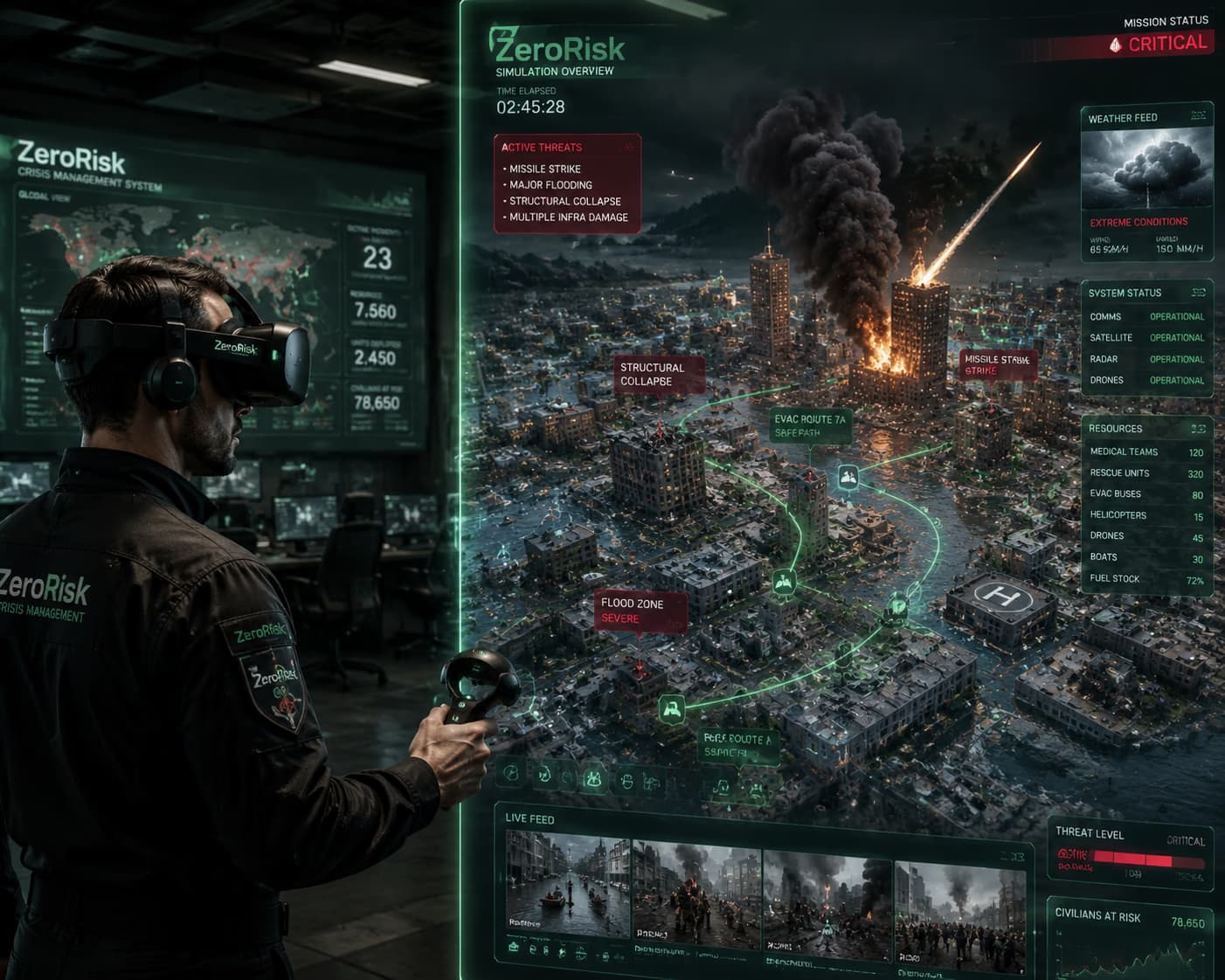
Then practices post-incident actions. The system displays the result of the selections and provides a score/report. The criteria and structure of the report are determined in the project specification
Technology, requirements and project output
Technology and technical requirements
- Standalone headset version and computer version
- Photorealistic scenarios; Choosing the headset model and minimum computer specifications based on the version and implementation requirements
Customization and deliverables
- The configuration of content for citizens, students and staff should be defined according to the situation and the audience in the scope of the order.
- Scenario development or special content must be defined within the scope of each order
- Offerings can be made with a one-time license or subscription and dedicated pricing. The independent headset and computer version are selected according to the project
- Content scope, number of scenarios, audience, language and reporting should be specified in the proposal
Before starting, define the business or operational goal, an example scenario, budget and timing constraints, deployment environment, and technical decision-maker. These details help establish a realistic scope and delivery criteria.
Who is this solution for?
Purchasing and implementation may involve technical, training, product, marketing, or operations teams, depending on the intended use. It can teach responses to earthquakes, floods, storms, and human-caused hazards in indoor and outdoor settings. If the problem or access to the necessary data and content is unclear, start with a needs assessment or pilot.
Product image gallery
2 image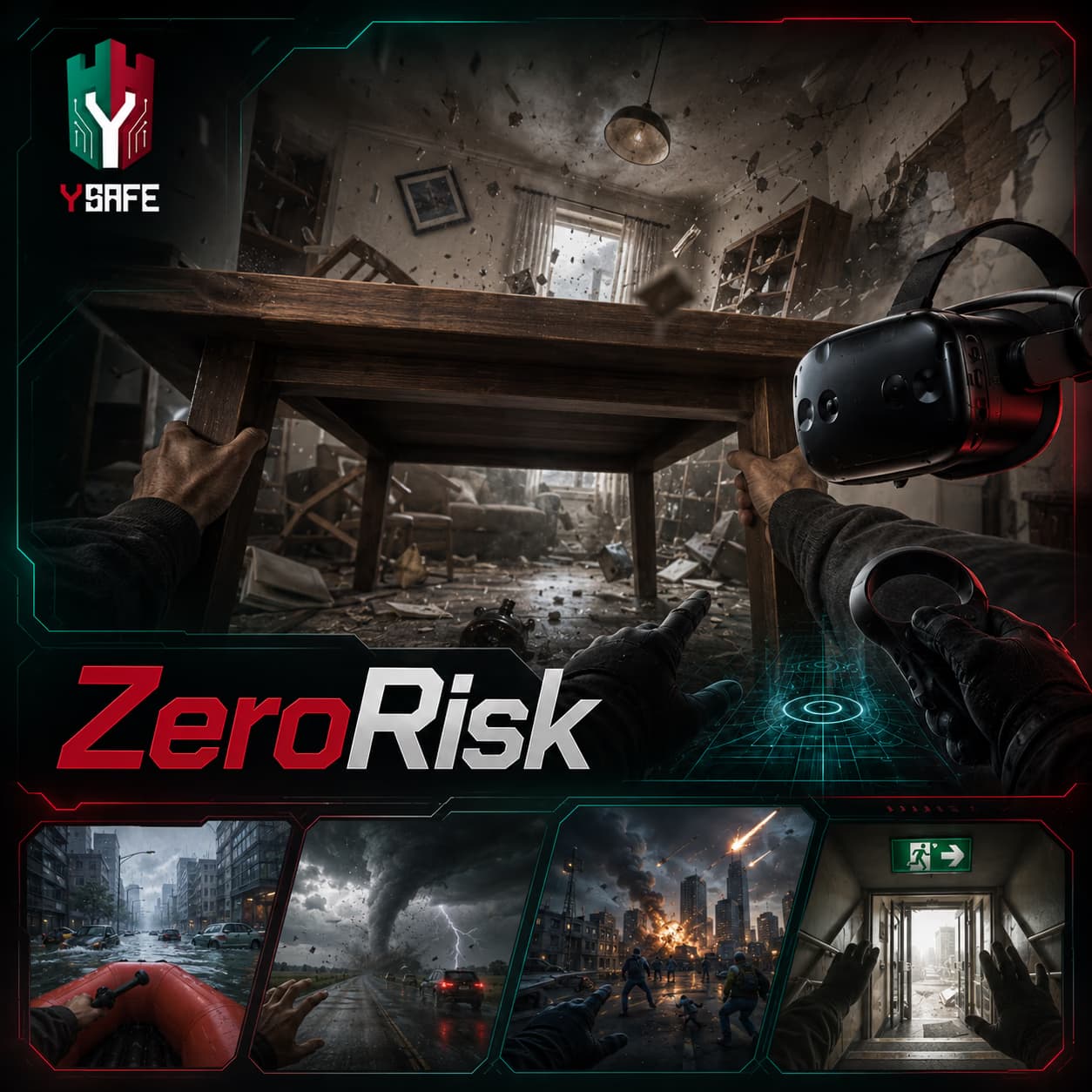
Related experience and projects
- Crisis training simulator for Magfa; The project is running based on the information of 1405
How to assess the solution's quality
Before purchasing or developing this solution, agree on the following three acceptance criteria in the technical review, alongside the required features:
- Compliance of the scenario with the client's operational or training instructions
- Correct action sequences and trainee assessment criteria
- Interactive testing on headset and instructor or HSE unit approval
Frequently asked questions
What types of crises are covered in the system?
Scenarios include earthquakes, wars, storms and floods; The activation of each scenario in the proposed version should be coordinated with the technical team
Are there indoor and outdoor scenarios?
Yes; Scenarios can be designed for indoor and outdoor environments to practice safe evacuation and sheltering decisions in different situations
How is the training before and after the accident?
Training can cover pre-event preparedness, crisis behavior choices, and post-crisis actions in a chain of exercises.
Is the standalone version of the headset workable?
Stand-alone headset version and computer version are among the implementation options; Version and device specifications must be verified
Why choose YMOND for this solution?
YMOND is a deep tech development group working across AI, computer vision, immersive XR experiences, and interactive hardware. YSafe is the specialist team behind this solution. Together, these capabilities allow the project team to address each client's challenge through coordinated software, content, and hardware design where needed.
Complementary solutions
How can I request a demo or a tailored proposal?
To explore a crisis response training simulator for your organization, share your challenge, audience, operating environment, and expected outcomes with the YMOND team. Request a specialist consultation or start with the Vision Plus needs assessment to assess feasibility, discuss customization, and receive a technical proposal.
